




Café Racer Culture
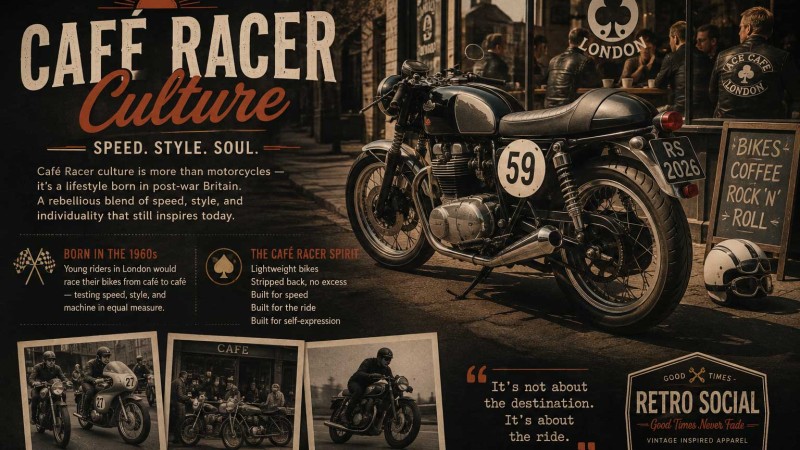
Speed. Style. Rebellion. Minimalism. Café racer culture is one of the purest expressions of vintage motorcycling — a blend of stripped‑down design, rock ’n’ roll attitude, and the pursuit of freedom. It’s a movement born in post‑war Britain and still alive today, influencing everything from custom bikes to graphic tees.
Where Café Racer Culture Began
Café racers emerged in 1950s–1960s London, where young riders modified their motorcycles for speed and agility, racing between cafés like the Ace Café and the Busy Bee. These short, fast rides shaped the name “café racer.”
The ritual was simple: Put a record on the jukebox — ride to a set point and back before the song ended. Hit 100 mph (“the ton”) and you earned respect.
This wasn’t about wealth or luxury. These were working‑class riders with second‑hand or surplus military bikes, rebuilt in back‑street garages. Speed, style, and rebellion defined the scene.
The Café Racer Look: Minimalism With Purpose
Café racers weren’t built for comfort — they were built for speed. Their design philosophy was simple: If it doesn’t make the bike faster or lighter, it comes off.
Key features included:
- Clip‑on handlebars for a forward‑leaning, aerodynamic stance
- Rear‑set footpegs to match the racing posture
- Single‑seat cowl symbolizing a machine built for one
- Stripped‑down frames with unnecessary parts removed for weight savings
- Polished metal and minimalist styling that emphasized performance over comfort
This aesthetic — raw, fast, and functional — became the DNA of the café racer.
The Rock ’n’ Roll Connection
Café racer culture grew alongside the rise of rock ’n’ roll. The Ace Café became a hub for young riders who loved American rock music, speed, and rebellion.
The bikes, the music, the attitude — all blended into a subculture that valued individuality, freedom, and defiance.
Creativity & Customization
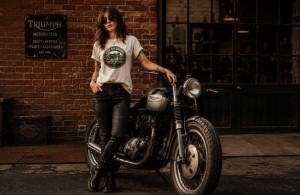
Café racers were the motorcycle equivalent of hot rods. Riders mixed parts from Triumph, Norton, BSA, and Vincent — whatever made the bike faster.
This DIY spirit shaped the culture:
- Build it yourself
- Strip it down
- Make it unique
- Make it fast
It wasn’t about brand loyalty — it was about results.
Global Influence
By the 1970s–1980s, manufacturers worldwide began producing factory café racers inspired by the originals. Harley‑Davidson, Honda, and BMW all released models that carried the stripped‑down, speed‑focused aesthetic.
Today, café racers remain one of the most influential styles in custom motorcycling — a tribute to their classic roots.
Why Café Racer Culture Inspires Graphic Tees
Café racers are visual nostalgia — perfect for retro design. Their influence shows up in:
- Minimalist silhouettes
- Chrome typography
- Speedometer graphics
- Rock ’n’ roll motifs
- Stripped‑down, vintage color palettes
The culture’s blend of rebellion, speed, and style aligns perfectly with Retro Social’s vibe. Café racer imagery feels authentic, timeless, and full of attitude — exactly what makes a great graphic tee.
The Spirit That Never Fades
Café racer culture is more than motorcycles. It’s freedom. It’s individuality. It’s the thrill of chasing the ton. It’s the belief that style should be simple, fast, and meaningful.
And just like Retro Social, café racer culture proves one thing: Good times never fade.
Leave a comment